

The Best Digital Mixer for Church in 2026: Recommendations by Church Size, Budget, and Team
The right digital mixing console doesn't just make your church sound better. It makes your volunteer tech team calmer, your Sunday mornings more consistent, and your whole audio system easier to grow. The wrong one creates a learning curve that burns out volunteers, produces uneven sound from week to week, and limits what your system can do as your church grows. After helping hundreds of churches across every size and budget spec the right console, here is exactly what to buy at each stage, why it matters, and what to look for before you spend a dollar.
Talk to a SoundPro House of Worship specialist with 16+ industry certifications. Real answers, fast.
- Why Churches Are Moving to Digital Mixing Consoles
- What to Look For in a Church Digital Mixer
- Best Digital Mixers for Small Churches (Under 200 Seats)
- Best Digital Mixers for Mid-Size Churches (200 to 800 Seats)
- Best Digital Mixers for Large Churches (800 and Up)
- Quick Comparison: All Five Consoles at a Glance
- How Your Console Connects to Your IEM System
- Next Steps
- FAQ
Why Churches Are Moving to Digital Mixing Consoles
Walk into most churches that upgraded their sound in the last five years and you will find a digital console at the center of everything. That shift happened for practical reasons that have nothing to do with features or specs.
The biggest one is scene recall. Every setting on a digital console, including every fader position, every EQ curve, every effects send level, can be saved as a scene and recalled instantly with a single button press. For a church that runs the same basic service structure every Sunday, this is transformative. Your volunteer tech team doesn't spend 20 minutes dialing in levels before every service. They hit recall and the board is ready. If Easter Sunday sounds perfect, you can save it and pull it up again next Easter.
The second reason is tablet control. Nearly every professional digital console today supports remote mixing from an iPad or Android tablet over Wi-Fi. Your sound tech can walk the room during rehearsal and adjust the mix based on what they're actually hearing from different seats, not from the fixed position of the soundboard at the back of the room. That single capability closes the gap between the mix your tech hears and the mix your congregation hears.
The third reason is onboard processing. A digital console replaces an entire rack of outboard gear. Every channel has a full parametric EQ, a gate, a compressor, and delay built in. The effects library covers reverb, echo, modulation, and more. For churches that were previously running an analog board plus a rack of processors, a digital console dramatically simplifies the system and reduces the number of things that can go wrong on a Sunday morning.
"The question isn't whether to go digital anymore. It's which digital console fits your church's size, your team's experience level, and the direction you're heading in the next three to five years. Buy for where you're going, not just where you are."
What to Look For in a Church Digital Mixer
Every church buying decision comes down to four things. Get these right and you'll have a console your team loves for a decade.
Channel count
Count every audio source that will ever be plugged into your system: wireless mic channels, wired mics on a choir or drum kit, direct boxes for keyboards and bass, media playback inputs, and any guest inputs. Add 30% on top of that number for growth. That's your minimum channel count. Running out of inputs is one of the most frustrating limitations a growing church can hit, and it's avoidable by buying slightly ahead of where you are now.
Aux sends and mix buses
This is the number that determines how many independent monitor mixes your system can support. For a church with an in-ear monitor system, you need one aux send per performer who needs their own unique mix. If you have six musicians all on IEMs with individual mixes, you need at least six aux sends. If you're running a basic floor wedge system, two to four aux sends are usually sufficient. This number is often the real reason a console needs to be upgraded as a church grows.
Volunteer-friendliness
A console that a trained engineer loves but your volunteer team can't operate is the wrong console for your church. Look for clean layer layouts, intuitive touchscreens, the ability to lock down controls volunteers shouldn't touch, and a strong base of online tutorials and community support. The Yamaha TF series and Allen & Heath CQ series were specifically designed with this in mind. The Midas M32 and Allen & Heath SQ series have deeper learning curves but reward that investment with more capability.
Expansion and networking
Can your console grow with you? Does it support a digital stage box so you can run a single Cat6 cable to the stage instead of a full analog snake? Can you add I/O expansion cards for Dante or AES50 networking? These questions matter less on day one and more on year three when your church adds a second campus or starts broadcasting its service.
Best Digital Mixers for Small Churches (Under 200 Seats)
Small churches need a console that is easy to operate, sounds great at a realistic budget, and can handle a full worship band without compromise. The two best options at this size target different needs.
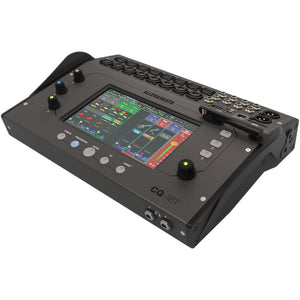
The CQ-18T is the most accessible professional digital mixer on the market right now. A 7-inch touchscreen handles navigation, built-in dual-band Wi-Fi means no external access point needed for tablet control, and the Gain Assistant and Feedback Assistant tools actively help less experienced operators get a clean mix quickly. Sixteen input channels, 96kHz processing, and six aux outputs give a small church worship team everything they need. It runs at 96kHz when most consoles at this price run at 48kHz, which translates directly to more headroom and less listening fatigue over a long service.
Shop at SoundPro →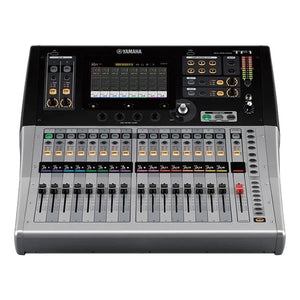
The TF1 is the gold standard answer to "what is the easiest digital mixer to learn?" The TouchFlow Operation interface puts every function within one or two touches, and the fader-based layout feels immediately familiar to anyone who has ever touched an analog board. Sixteen input channels, 10 aux buses (more than enough for a growing IEM system), and Yamaha's D-PRE microphone preamps deliver professional audio quality in a volunteer-friendly package. The TF-RACK and TF3 scale up as the church grows without requiring your team to relearn a new interface.
Shop at SoundPro →Best Digital Mixers for Mid-Size Churches (200 to 800 Seats)
Mid-size churches are where the console decision gets serious. You're running multiple wireless microphone systems, a full worship band, an in-ear monitor system for several performers, and probably a separate stream mix. You need professional-grade routing, enough aux sends to feed everyone, and a console your team can operate reliably every week. Two consoles own this category.
SoundPro's House of Worship specialists spec digital mixing systems for churches of every size every week. Let us match the right console to your room and your team.
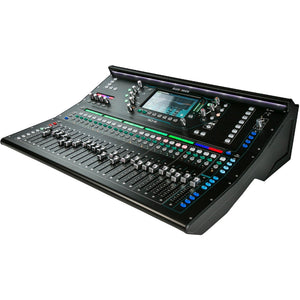
The SQ-6 is built on the same XCVI processing engine as the flagship dLive system, which means 96kHz audio, under 0.7ms of latency, and studio-grade sound quality in a mid-size console. Forty-eight input channels, 36 mix buses, and 24 onboard preamps give a growing church room to expand without hitting a ceiling. The touchscreen-plus-fader layout works for both seasoned engineers and capable volunteers. For a church running a full wireless mic system, in-ear monitors for a six-person worship team, and a streaming mix out, the SQ-6 handles all of it cleanly. If your church is also considering our IEM system guide, the SQ-6's aux bus count gives you everything you need to feed individual wireless IEM mixes to every performer on stage.
Shop at SoundPro →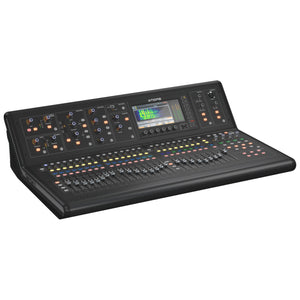
The M32 has been the church standard for over a decade, and the reason is simple: Midas preamps, 40 input channels, 25 mix buses, and an enormous community of users and training resources. If your volunteer finds a problem on a Sunday morning, there are hundreds of YouTube tutorials and a thriving user forum covering exactly that issue. The M32R is the rack-mount version for churches with a separate stage rack configuration. The AES50 digital snake connectivity means you can run a single cable from the console to the stage. Churches choosing between the SQ-6 and M32 are making a close call. The SQ-6 edges out in raw audio processing specs; the M32 wins on community support and the depth of its ecosystem.
Shop at SoundPro →"The M32 has sold more units into churches than any other professional console at its price point. There is a reason for that. When your tech calls SoundPro on a Tuesday with a routing question, there is also a YouTube video from six churches who had the exact same question. That ecosystem matters."
Best Digital Mixers for Large Churches (800 Seats and Up)
Large churches, multisite operations, and churches that broadcast their services have needs that go well beyond what a mid-tier console can handle. You need broadcast-grade audio quality, enough routing for full band plus choir plus broadcast mix plus multiple monitor mixes, and a console that can grow into a full networked campus system. There is one clear answer.
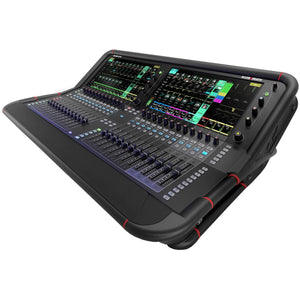
The Avantis is the console that SoundPro's HOW specialists recommend most often to large and multisite churches. Sixty-four input channels, 42 mix buses, 96kHz processing, dual 7-inch HD touchscreens, and a dPack that unlocks Waves plugins processing directly on the console surface. The scene management system handles the full complexity of a multi-service church: you can save and lock different configurations for the main service, the youth room, and the midweek event, and your team can switch between them in seconds. iPad control via the Avantis Director app means your lead engineer can roam the room or manage a remote campus from anywhere on the network.
Shop at SoundPro →For churches that have grown beyond even the Avantis, the Allen & Heath dLive system represents the full broadcast-grade solution, with a modular MixRack and surface architecture that can scale to 128 channels across multiple surfaces. SoundPro's Account Managers can walk through dLive configurations for churches planning major facility upgrades or broadcast deployments.
Quick Comparison: All Five Consoles at a Glance
| Console | Best For | Inputs | Mix Buses | Key Advantage |
|---|---|---|---|---|
| Allen & Heath CQ-18T | Small church, volunteer teams | 16 | 6 aux | 96kHz, built-in Wi-Fi, assistive tools |
| Yamaha TF1 | Small church, analog-to-digital transition | 16 | 10 aux | TouchFlow interface, easiest to learn |
| Allen & Heath SQ-6 | Mid-size church with IEM system | 48 | 36 buses | 96kHz, deep routing, dLive processing |
| Midas M32 LIVE | Mid-size church, volunteer-run, community support | 40 | 25 buses | Legendary preamps, huge user ecosystem |
| Allen & Heath Avantis | Large church, multisite, broadcast | 64 | 42 buses | Dual touchscreens, Waves dPack, full networking |
How Your Console Connects to Your IEM System
One of the most important questions churches ask when selecting a console is whether it supports their in-ear monitor system. The answer is almost always yes, but the quality of that integration depends on how many aux sends the console provides.
In a properly configured IEM setup, each performer receives their own unique monitor mix through a dedicated aux send from the console. The console routes that aux send to a wireless IEM transmitter, which broadcasts it wirelessly to the performer's bodypack receiver. If you have six musicians on stage all wanting individual monitor mixes, you need six dedicated aux sends from your console, six IEM transmitters, and six bodypacks.
This is why the aux bus count matters so much in the console selection. The CQ-18T has 6 aux outputs, which is enough for a small worship team. The Yamaha TF1 has 10, which covers most mid-size band configurations. The Allen & Heath SQ-6 has 36 mix buses, which gives you room for every performer plus a dedicated stream mix, broadcast mix, and engineer's monitor all simultaneously. If you're building or expanding your IEM system alongside your console, our complete in-ear monitor guide covers every component of that system in detail, including how to configure your console's aux sends for optimal IEM performance.
- Complete In-Ear Monitor Guide for Churches and Live Production
- Church Live Streaming Equipment Guide
- Allen & Heath Consoles at SoundPro
- Yamaha Consoles at SoundPro
- Midas Consoles at SoundPro
Next Steps
The right console is out there for your church. Here's how to get from this article to the right purchase decision without second-guessing yourself.
- Count your inputs and buses first. Inventory every audio source you run or plan to run. Count performers who need IEM mixes. Add your stream mix if applicable. That number defines your minimum spec before price ever enters the conversation.
- Be honest about your team's technical level. A capable volunteer team can absolutely learn the M32 or SQ-6. But if you're starting from scratch with inexperienced operators, the CQ-18T or TF1 will serve you better in the first year.
- Buy for where you'll be in three years, not just today. The most common mistake we see is churches buying a console that fits today and needs to be replaced in two years. Buying one tier up now almost always costs less than buying twice.
- Call SoundPro before you finalize anything. Our HOW Account Managers spec console systems for churches every week. We'll ask about your room, your team, your current gear, and your growth plans before we make a recommendation. A 20-minute call can save you from a $3,000 mistake.
Get a personalized quote from SoundPro's certified House of Worship specialists. We'll match the right console to your church size, team, and budget.
FAQ: Digital Mixers for Church
What is the best digital mixer for a small church?
For small churches under 200 seats, the Allen & Heath CQ-18T and Yamaha TF1 are the two strongest options. The CQ-18T is the better choice for churches that want the easiest possible learning curve, built-in Wi-Fi tablet control, and assistive mixing tools. The TF1 is the better choice for churches transitioning from analog who want a familiar fader layout and a proven Yamaha platform with clear upgrade options.
How many input channels does a church mixer need?
Count every audio source in your system: wireless mic channels, wired mics on choir or instruments, direct boxes for keyboards and bass, media playback inputs, and any guest inputs. Then add 30% for growth. A typical small worship band (pastor, two vocalists, guitar, keys, drums) needs 10 to 16 channels. A mid-size church with a full band and choir typically needs 24 to 40. A large church with orchestra, broadcast, and multiple zones may need 48 to 64.
What is scene recall and why does it matter for church?
Scene recall saves every single setting on your console, including fader positions, EQ curves, effects levels, and routing, as a named snapshot. You can recall that snapshot instantly with one button press. For a church that runs the same basic service structure every week, this means your volunteer tech team doesn't spend 20 minutes resetting the board before every service. It also means that if Easter Sunday sounds perfect, you save that scene and load it again next year.
Can volunteers learn to use a digital mixer?
Yes, with the right console and structured training. The Allen & Heath CQ-18T and Yamaha TF series were specifically designed for users who are not professional audio engineers. The M32 and SQ series have steeper initial learning curves but a massive base of tutorials, YouTube training videos, and online community support that makes self-teaching genuinely viable. The key is choosing a console that matches your team's current technical level while giving them room to grow.
What is the difference between analog and digital mixers for church?
Analog mixers are simpler to learn but offer no scene recall, no tablet control, and no onboard processing beyond basic EQ. Digital mixers offer scene recall, wireless remote mixing, onboard dynamics and effects on every channel, and flexible routing that analog boards can't match. For churches with consistent weekly services, a volunteer tech team, and plans to grow, the practical benefits of digital are decisive. The only strong case for analog today is a very small church that needs maximum simplicity with zero budget for training.
Do I need a digital snake with a digital mixer?
A digital snake is not required but is highly recommended for any church where the console position is more than 25 to 30 feet from the stage. A digital snake like the Midas DL16 or Allen & Heath GX4816 replaces your traditional analog snake (a thick multi-channel cable bundle) with a single Cat6 Ethernet cable carrying all audio signals digitally. This reduces cable runs, eliminates the noise pickup that long analog runs can accumulate, and makes your install cleaner and more reliable.
Can I control a church mixer from an iPad or tablet?
Yes. All five consoles featured in this guide support tablet control over Wi-Fi. The Allen & Heath CQ-18T has built-in dual-band Wi-Fi so no external router is needed. The Yamaha TF series, Allen & Heath SQ series, Midas M32, and Avantis all require a Wi-Fi access point connected to the console's network port. Tablet control lets your tech team walk the room during rehearsal and adjust the mix from where the congregation sits, which is one of the most impactful improvements you can make to a weekly service.
How does a digital mixer connect to an in-ear monitor system?
Each performer's IEM mix comes from a dedicated aux send or mix bus on the console. The console routes that aux output via XLR to the IEM wireless transmitter, which broadcasts the mix to the performer's bodypack receiver and earphones. You need one aux send per unique performer mix. For a full band on IEMs, this is often the deciding factor in console selection since you need enough buses to cover every performer plus the main PA output and stream mix. Our complete IEM guide covers this in detail.
Allen & Heath SQ-6 vs Midas M32: which is better for church?
This is the most common mid-tier question we get. The SQ-6 processes audio at 96kHz (vs. 48kHz on the M32), has 48 input channels vs. 40, and uses the same XCVI engine as Allen & Heath's flagship dLive. The M32 wins on community support: more churches are running M32s than any other console at this price, which means more training videos, more local engineers who know the platform, and a broader support network. Both are excellent consoles. The SQ-6 edges out on specs; the M32 edges out on ecosystem. When in doubt, ask our team which platform is more common in your area.
What digital mixer do most churches use?
Church sound surveys consistently show the Midas M32 and Midas M32R as the most widely used professional digital consoles in mid-size to large churches. Allen & Heath consoles (the QU series, SQ series, and Avantis) are the second most common. Yamaha TF series consoles are the most common in smaller churches and among churches transitioning from analog. At the entry level, the Allen & Heath CQ series has grown rapidly since its release.
How much does a church digital mixer cost?
Entry-level professional digital consoles like the Allen & Heath CQ-18T start around $1,099. The Yamaha TF1 runs around $1,499. Mid-tier consoles like the Allen & Heath SQ-5 start at $2,800 and the Midas M32R at $3,399. The full-size Allen & Heath SQ-6 is around $3,500 and the Midas M32 LIVE around $3,999. The Allen & Heath Avantis with dPack is $7,999 and above. SoundPro's Account Managers offer personalized pricing on all of these platforms.
What is the easiest digital mixer to learn for church volunteers?
The Allen & Heath CQ-18T is the easiest professional digital console to learn today, thanks to its assistive Gain Assistant and Feedback Assistant tools, large touchscreen, and minimal button count. The Yamaha TF series is the easiest fader-based console, with the TouchFlow Operation interface designed specifically to make digital mixing accessible to users coming from an analog background. Both have extensive online training libraries and strong user communities.
How fast can SoundPro ship a church mixing console?
In-stock consoles ship same day on orders placed before 4:00 PM CST. For custom system configurations, digital snake integration, or items with manufacturer lead time, SoundPro's Account Managers can confirm availability and map out a delivery timeline. If you're planning an install before a fall series launch, reach out now. Console lead times can extend heading into peak season, and starting the conversation early protects your install window.