


Yamaha's AV Control System for Commercial Installs: DME5, XMS & Conductor
Most commercial AV installs end up as a pile of separate boxes: a processor from one line, an amp from another, a wall controller that only half-talks to both. Yamaha's next generation of Commercial Installation Solutions is built to close that gap. The DME5 and DME3 processors, the XMS amplifier series, the MCP2 wall controller, and the TCD10 touchscreen now run as one coordinated system instead of a rack of boxes an integrator has to program separately. Here's what's actually in the ecosystem and how the pieces fit together.
SoundPro is an authorized Yamaha dealer. Our integration specialists can configure a Commercial Installation Solutions system around your project.
What's Actually New Here
The DME5 and DME3 join Yamaha's established DME processor line, but two things separate this generation from what came before. First, 96kHz audio processing and four channels of flexible I/O that can be assigned as inputs or outputs, which gives an integrator more routing flexibility without adding boxes. Second, and more significant: a feature called Conductor, which lets a single DME5 or DME3 coordinate every other Yamaha device in the room instead of programming each one on its own. Paired with ProVisionaire V3.0 software, that's the difference between managing a rack of individually programmed boxes and managing one system.
"The processor and the amp were never really the hard part. The hard part was always getting five different boxes to behave like one system. That's what Conductor is actually solving."
The Processors: DME5 and DME3
The DME5 and DME3 are the brains of the system, handling routing, EQ, and system logic for everything connected to it.
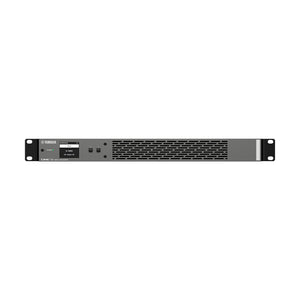
The larger of the two processors, built for bigger installs that need more inputs, outputs, and processing depth. Supports Conductor for coordinating the rest of the system and networks over Dante for integration with a broader audio system. We cover this unit in more detail in our loudspeaker management systems guide.
Shop at SoundPro →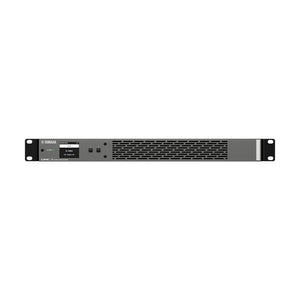
A smaller-footprint version of the same platform, right-sized for single-room installs like a classroom or conference room that don't need the DME5's full channel count but still benefit from Conductor and networked control.
Shop at SoundPro →The Amplifiers: XMS Series
The XMS series covers eight models across 1U and 2U formats, with power sharing across four output channels per unit. Every model includes onboard DSP for speaker processing, delay, and matrix routing, so basic tuning doesn't require a separate processor in the rack.
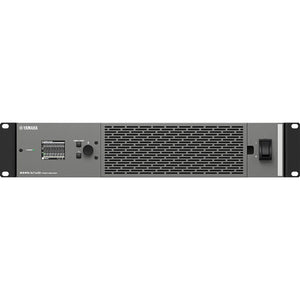
A 2400W total, 8-channel Class D amp with onboard DSP and Dante networking, switchable between Hi-Z (70V) and Lo-Z output to match whatever speakers are already in the building. If you're deciding which output type your project needs, our 70V vs. Low Impedance guide breaks that decision down.
Shop at SoundPro →Tell us your zone count and speaker type and we'll spec it out.
The Controllers: MCP2 and TCD10
These are what building staff actually touch day to day, and they're what makes the rest of the ecosystem usable by someone who isn't the integrator.
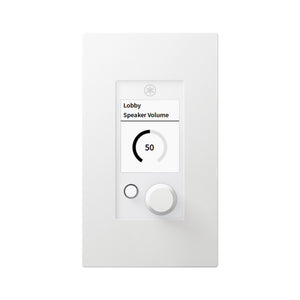
A simple wall-mounted control panel that supports up to 64 devices, letting staff adjust volume or switch presets without needing booth access or technical training. Also manages third-party gear like lighting and projectors alongside the Yamaha system.
Shop at SoundPro →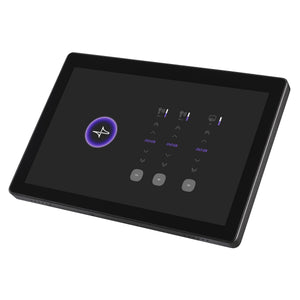
A full touchscreen interface for more complex control needs than the MCP2 covers, powered over a single Ethernet cable. A common fit for a lobby, control booth, or any space where staff need more than basic volume and preset control.
Shop at SoundPro →Because the whole ecosystem runs on Dante for audio networking, it's worth reading our guide to Dante audio if this is your first networked install. And if the same building already runs a Yamaha console for live events, our Yamaha DM7 guide covers the console side of the same ecosystem, since both platforms share Yamaha's networked audio approach.
Choosing Components by Project Size
| Project Size | Processor | Controller |
|---|---|---|
| Single classroom or conference room | DME3 | MCP2 |
| Multi-zone building (sanctuary + lobby + overflow) | DME5 | MCP2 or TCD10 |
| Campus or multi-building install | Multiple DME5 units with Conductor | TCD10 per building, ProVisionaire for central management |
Next Steps
If you're scoping a project with this ecosystem, here's the path we walk through with integrators:
- Count your zones. Zone count drives the choice between a single DME3 and a multi-unit DME5 deployment with Conductor.
- Confirm your speaker output type. The XMS amps switch between Hi-Z and Lo-Z, so match that to what's already installed or planned.
- Decide on staff-facing control. Simple volume and preset needs point to the MCP2; more complex day-to-day control points to the TCD10.
- Call SoundPro before you finalize a spec. As an authorized Yamaha dealer, our integration specialists can configure the system around your existing gear and your install timeline.
- Full Yamaha Commercial Installation Solutions Lineup at SoundPro
- Loudspeaker Management Systems: What They Do and Which One Fits Your Room
- What Is Dante Audio? A Complete Guide for AV Integrators
- 70V vs. Low Impedance: How to Spec a Commercial Sound System
- Yamaha DM7 Digital Mixer Guide
Get a custom quote from SoundPro, an authorized Yamaha dealer with 16+ industry certifications.
FAQ: Yamaha Commercial Installation Solutions
What's new in this generation compared to older Yamaha DME processors?
The DME5 and DME3 add 96kHz audio processing, Dante and analog I/O, and four channels of flexible I/O that can be assigned as inputs or outputs. The bigger change is Conductor, a feature that lets a DME5 or DME3 coordinate every other Yamaha device in the system instead of requiring each box to be programmed separately.
Will the MCP2 and TCD10 controllers work with equipment that's already installed?
Yes. The MCP2 supports up to 64 devices, and both the MCP2 and TCD10 can manage third-party gear like lighting and projectors alongside the Yamaha system, so existing control hardware doesn't need to be replaced to add this ecosystem to a project.
What's the difference between the DME processors and the XMS amplifiers?
The DME5 and DME3 are the signal processors, handling routing, EQ, and system logic. The XMS series are the power amplifiers that drive the speakers, available in eight models across 1U and 2U formats, each with onboard DSP for speaker processing, delay, and matrix routing.
Is this a good fit for a school or church with multiple rooms?
Yes. The flexible I/O on the DME5 and DME3, combined with the XMS amplifiers and MCP2 or TCD10 controllers, can cover a single classroom or sanctuary and scale to a full campus with multiple buildings, with ProVisionaire software managing the whole system from one place.
How fast can SoundPro ship this equipment?
In-stock items ship same day on orders placed before 4:00 PM CST. As an authorized Yamaha dealer, SoundPro's Account Managers can also help sequence a larger multi-room order around your install timeline.