


Church Lighting Guide: Stage Lighting, LED Fixtures, and Control for Houses of Worship
Church lighting has two jobs that are equally important: helping people see, and shaping the atmosphere of the room. Professional features that were once limited to large stages, including color mixing, programmable cues, and network control, are now accessible to churches of every size. The challenge is applying them with restraint, so the lighting supports the message without competing with it.
This guide explains how church stage lighting works, which fixtures fit which jobs, how LED compares with traditional lighting, and how to set up lighting for livestreamed and holiday services. It applies equally to a small sanctuary adding its first fixtures and a larger house of worship rebuilding an older rig.
SoundPro's House of Worship specialists can recommend a fixture and control package built around your space, budget, and service style.
- Function and Form: What Church Lighting Needs to Do
- Building a Church Lighting Strategy
- Front, Back, and Wash Lighting Explained
- Choosing Church Stage Lighting Fixtures
- LED Church Lighting vs. Traditional Fixtures
- Lighting for Livestreamed Services
- Control, Presets, and Seasonal Looks
- Truss, Cables, and Accessories
- FAQ: Church Lighting
Function and Form: What Church Lighting Needs to Do
Function
Function comes first. The worship leader needs enough light to read notes, musicians need to see their music, and the congregation needs to see the people leading. This becomes more demanding when services are livestreamed, because the same people have to look natural to a camera and to the room without blinding anyone in the front rows.
Form
Beyond visibility, lighting shapes how the room feels. Some congregations welcome color changes and effects, while others want a restrained look that never draws attention to itself. Whatever the worship style, the goal is a welcoming first impression for visitors and a focused environment for regular attendees. Thoughtful lighting directs attention to the message and the people delivering it.
Building a Church Lighting Strategy
Start with the budget, then answer three sets of questions. The answers determine what kinds of fixtures you need, how many, and where they should go.
Your space
- What are the dimensions of the room, and how high is the ceiling?
- Are there architectural features such as stained glass, textured walls, or dark wood?
- How much natural light does the room get, and how does that change for evening services?
- What color are the walls? Lights take on the color of the surface they hit, so neutral walls give the most flexibility.
Your services
- What happens in a typical service, and how should each segment be lit?
- Will the service be streamed or recorded?
- Do you plan to change lighting during the service, and how often?
- Are there special events such as pageants or holiday productions that need additional looks?
Your people
- Who operates the lighting during services, and how much training do they have?
- Are there members of the congregation with visual impairments who need special consideration?
"A lighting design that works is rarely the one with the most fixtures. It is the one a volunteer can operate confidently every week."
Front, Back, and Wash Lighting Explained
Front lighting
In a house of worship, lighting is centered on people: the worship leader, the band, the choir, and guest speakers. Front lighting does most of that work. It is typically a clean white light mounted overhead and angled down at about 45 degrees, which gives good visibility without blinding the person on the platform. A single front light creates harsh shadows, so use fixtures offset to the left and right to balance them. Avoid overdoing it, since too much front light can wash people out, especially on camera. Warm white color temperature and dimming help achieve a natural look.
Backlighting
Once shadows are controlled, a person lit only from the front can look flat against the backdrop. Backlights aim toward the congregation from behind the platform, adding definition and separation. Front lights should be clean white, but backlights are often colored. Subtle amber adds warmth, and color changes can match the mood of different parts of the service. The goal is to guide the congregation toward the intended response, not to distract from it.
Uplighting and washes
Front and back lighting are aimed at people. Uplighting and wash lighting are aimed at the room, highlighting tall ceilings, walls, and architectural details. Without them, a space can look dark and flat. A wash fills the gaps between front and back lighting and is especially useful for textured surfaces. Washes can be white, colored, or a mix, depending on the room.
Church sanctuary lighting
Sanctuary lighting is the room-level layer that sits beneath the stage lighting. In a church sanctuary, the goal is a comfortable, even level of light for the congregation, with enough control to lower the room during worship and raise it for announcements, readings, and greeting time. Architectural washes, ceiling-mounted fixtures, and dimmable house lights usually share one controller with the stage lighting, so a single preset can change both the room and the platform at the same time.
Effects
Many churches skip effects, but they can be useful for pageants and special events. Haze, for example, adds contrast and makes light beams visible. Subtlety matters, because too much haze can make a service feel like a concert.
Choosing Church Stage Lighting Fixtures
The right number of fixtures depends mainly on room size. Start with the minimum needed to light the platform evenly, then build gradually. The more fixtures in the setup, the more dimension the lighting gives to the front of the room. The table below summarizes the main fixture types churches use.
| Fixture | Best Use | Notes |
|---|---|---|
| Spotlights and followspots | Highlighting a soloist or speaker | Create a visual centerpiece |
| Ellipsoidals | Front lighting with matched color and temperature | A long-standing stage lighting staple, useful when fixtures must match for streaming |
| Pars | Backlight and color washes | Compact, energy-efficient, and affordable. Many offer flicker-free, low-noise operation for camera use |
| Fresnels | Front lighting on camera | Adjustable lens controls beam width, with natural skin tones and quiet operation |
| Moving heads | Flexible spot, wash, and flood roles | Allow changes later without moving installation points |
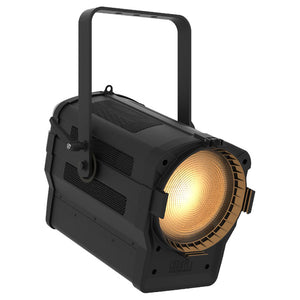
A warm white LED Fresnel suited to front lighting. The adjustable lens controls beam width, and warm white output supports natural skin tones in the room and on camera.
Shop at SoundPro →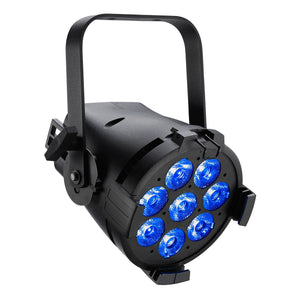
An LED par for color washes and backlight. Pars are a compact, energy-efficient option and a practical way to add color to a sanctuary without a large fixture count.
Shop at SoundPro →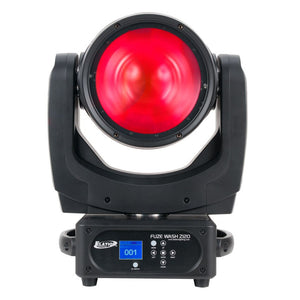
A 120W RGBW COB LED moving head with motorized zoom, pan, and tilt, plus flicker-free operation for camera work. It can serve as a fixed wash or spot today and be re-aimed later as the room or service style changes.
Shop at SoundPro →LED Church Lighting vs. Traditional Fixtures
Traditional stage lights use incandescent lamps. They offer high intensity and a familiar look, but the lamps burn out, use more electricity, and give off a lot of heat. LED church lighting has made professional lighting more attainable for churches on a budget.
- Efficiency: LEDs use less electricity, which reduces operating costs.
- Lifespan: LEDs last longer and do not need lamp replacement.
- Color consistency: LEDs reproduce color consistently, which matters for camera work where fixtures need to match.
- Size and heat: LEDs are more compact and run cooler, which helps in tight spaces and older buildings and reduces the risk of burns.
There are tradeoffs. Some LED fixtures are less bright than traditional fixtures of the same size, although the gap has narrowed, and dimming on some LED fixtures is not as smooth as on traditional lamps. Test dimming behavior in your own space before committing to a full upgrade.
Lighting for Livestreamed Services
A camera sees light differently than people do. Lighting that looks fine in the room can look flat, washed out, or inconsistent on a stream. These adjustments make the biggest difference.
- Choose flicker-free fixtures. Flicker can appear as banding or pulsing on camera. Flicker-free, quiet-operation fixtures also avoid interfering with audio.
- Match fixtures. Use the same fixture type and consistent color temperature across your front lights so skin tones stay uniform.
- Avoid overlighting. Too much front light washes out faces on camera. Adjust temperature and dimming until the look is natural.
- Set camera white balance with the lights on. Check it again whenever you change lighting looks.
If you are building out the video side of the system, our church live streaming equipment guide covers cameras, encoders, and audio.
Tell us about your sanctuary, cameras, and service schedule and a SoundPro Account Manager will recommend fixtures that work in the room and on the stream.
Control, Presets, and Seasonal Looks
A lighting controller coordinates the functions of multiple fixtures. With presets, volunteers can recall a look with one button, which is more reliable than adjusting fixtures live. Controllers are designed with intuitive layouts for novice operators. Other control options include dimmers, relays, and receivers. A dimmer controls brightness, a relay routes signal from one place to another, and transmitters and receivers support DMX, which controls multiple lighting channels over a single cable.
Rehearsal matters as much as the gear. If lighting changes from song to song, use the worship team's rehearsal as a dry run for lighting as well as audio, and note solos, announcement breaks, and other moments when settings need to change. Many churches use saved looks to mark the season, for example warm ambers and soft whites for candlelight-style Christmas Eve services and brighter washes for Easter. For a full preparation plan covering sound, lighting, and streaming, see our church busy season tech checklist.
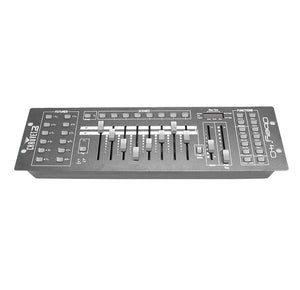
A DMX controller that handles up to 12 fixtures at 16 channels each, with 30 banks of 8 scenes for saved looks and added fog and strobe control. Stored scenes let volunteers recall a service look with one button instead of building it live.
Shop at SoundPro →Truss, Cables, and Accessories
Fixtures get the attention, but the supporting equipment makes the system dependable. Truss and stage equipment let you suspend fixtures securely with clamps, couplers, and hardware, and the right cables carry power and signal reliably. Test equipment helps confirm everything works before service, so there are no surprises mid-service. Filters, lenses, and barndoors shape the light once the fixtures are in place.
Share your room dimensions and goals and a SoundPro House of Worship specialist will help you choose fixtures, control, and accessories.
Shop Church Lighting at SoundPro
- Lighting Fixtures at SoundPro
- Lighting Controllers at SoundPro
- Dimmers, Relays, and Receivers at SoundPro
- Truss and Stage Equipment at SoundPro
- Fog and Effects Lighting at SoundPro
- Lighting Accessories at SoundPro
FAQ: Church Lighting
How many lights does a church need?
It depends mainly on the size of the space and how much of it you need to light. A common approach is to start with the minimum number of fixtures needed to light the platform evenly, then add fixtures over time. More fixtures give more dimension and flexibility, but a small sanctuary can look very good with a modest, well-placed setup.
What is the best type of light for church stage lighting?
LED fixtures are the most common choice because they use less energy, run cooler, and do not require lamp replacement. Fresnels and ellipsoidals suit front lighting, pars work well for color washes and backlight, and moving heads add flexibility for churches that change looks often.
What lighting is best for a livestreamed church service?
Choose fixtures with flicker-free operation and quiet operation, and keep color temperature consistent across the front lights. Front lighting at about 45 degrees, offset to both sides, reduces shadows. Warm white light helps avoid a washed-out look on camera.
Do churches need a lighting controller?
A controller is recommended once you have more than a handful of fixtures or want to change looks during a service. Saved presets let volunteers recall a look with one button, which is more reliable than adjusting fixtures live.
Is LED lighting worth it for a church?
For most churches, yes. LED fixtures use less electricity, have long lifespans, produce less heat, and keep color consistent across fixtures, which matters for livestreaming. Some older dimming and effect behavior can differ from traditional fixtures, so test dimming in your space before committing to a full upgrade.


