


Church Busy Season Guide: Sound, Lighting, and Livestream
Christmas Eve and Easter bring the largest crowds most churches see all year. Visitors arrive who have not attended since the last holiday, families fill sections of the sanctuary that sit empty most Sundays, and many congregations add extra services, guest musicians, and a larger livestream audience on top of it. Everything the tech team does on a normal Sunday is tested at higher volume and with less margin for error.
This guide is a planning checklist for houses of worship heading into the busy season. It covers the three systems that fail most visibly under pressure (audio, lighting, and video), the volunteer preparation that prevents most problems, and the church technology trends worth knowing about in 2026. Each section links to a deeper SoundPro guide when you want to go further.
SoundPro's House of Worship specialists have 16+ industry certifications and can review your sound, lighting, and streaming plan before the holidays.
- Busy Season Timeline: What to Do and When
- Audio: Wireless Microphones, Mixing, and Room Coverage
- Lighting: Visibility, Mood, and Camera-Friendly Light
- Livestream and Video: Planning for Hybrid Attendance
- Volunteers and Rehearsal
- Church Technology Trends for 2026
- Final Week Checklist
- FAQ: Church Busy Season Tech
Busy Season Timeline: What to Do and When
Most holiday service problems are visible weeks before the service if someone is looking for them. A dropout during a rehearsal, a fixture that flickers, or a stream that buffers during a test is a much cheaper problem in October than on Christmas Eve. The table below breaks the preparation into four windows so each system gets attention while there is still time to fix it.
| Timeframe | Audio | Lighting | Video and Streaming |
|---|---|---|---|
| 6 to 8 weeks out | Audit wireless mics, batteries, and cables. Run a frequency scan. | Test every fixture. Note any that flicker, drift, or fail to power on. | Check camera, encoder, and upload speed. |
| 3 to 4 weeks out | Order missing gear. Confirm mic count for guest musicians and narrators. | Order replacements. Draft the lighting looks for each service. | Run a full test stream from camera to platform. |
| 1 to 2 weeks out | Rehearse with the full band and choir. Save mixer scenes. | Program and save cues. Check focus and dimming. | Confirm stream scheduling, backup connection, and audio feed. |
| Service week | Replace all batteries. Label and stage spares. | Run each cue once in the empty room. | Start a test stream an hour before service. |
"The failures that show up on Christmas Eve are almost never new. They are the same intermittent dropout or the same dim fixture the team noticed in October and planned to deal with later."
Audio: Wireless Microphones, Mixing, and Room Coverage
Wireless microphones
Wireless problems are the most common audio failure on high-attendance Sundays. Holiday programs add narrators, soloists, children's groups, and guest musicians, which raises the number of transmitters on stage and the amount of radio traffic in the room. Before the first rehearsal, replace batteries, run a frequency scan so every system is on a clear channel, and confirm that receiver antennas have a clear line of sight to the stage. Our wireless microphone guide for churches covers channel counts, headset and handheld options, and interference prevention in detail, and our article on wireless reliability during the holiday season explains how antennas and distribution keep signal strong across the room.
Choosing a system comes down to budget, channel count, and the size of the room. Sennheiser covers the range: the XSW series suits tighter budgets, the EW-DX line is a mid-range digital platform that fits most sanctuaries, and the Spectera series is a wideband system built for larger or more complex venues. Spectera now includes handheld transmitters for worship leaders and speakers, and the Spectera base station supports up to 64 channels with redundant Dante connections.

A two-channel digital handheld set with two EW-DX SKM-S transmitters, two MMD 835 cardioid dynamic capsules, and a rackmount receiver. It covers a pastor and a worship leader, or two soloists, from a single receiver, which makes it a practical foundation for a holiday program.
Shop at SoundPro →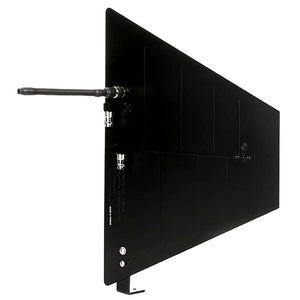
Antenna placement has a direct effect on dropouts. A diversity antenna mounted with a clear view of the stage helps receivers hold a stable signal when speakers and musicians move across the room. RF Venue antenna and distribution products pair with most wireless systems, including Sennheiser.
Shop at SoundPro →Mixing and the worship team
A holiday service usually has more inputs and more transitions than a normal Sunday. A digital mixer that stores scenes lets the team save the sound of the band, the choir, and the spoken portions separately, then recall them instead of rebuilding the mix live. Yamaha's DM family covers most church sizes, from the compact DM3 for smaller rooms to the DM5 and the 120-channel DM7 for larger productions, and the Dante-enabled DM3-D adds networked audio for rooms with stage boxes or other Dante devices. Our guide to the best digital mixer for church explains what to look for in any console. Worship teams that use in-ear monitors should also check batteries and frequencies on the monitor system, and our in-ear monitor guide and worship team audio setup guide cover that side of the system.
Speakers and coverage in a full room
A full room absorbs more sound than an empty one, and holiday crowds fill seats that are rarely used, so a mix that sounds right during an empty rehearsal often needs adjustment once the congregation arrives. Plan time to walk the room during the first service and make small level changes. If your system struggles to cover the room evenly even when it is working correctly, the speakers may be the limit. The table below matches common church spaces to powered and installed options.
| Room or Need | Options | Notes |
|---|---|---|
| Sanctuary mains with even coverage | JBL SRX906LA, JBL SRX910LA, DAS EVENT-28A, DAS EVENT-30A | Compact powered line arrays with built-in amplification and DSP, built to scale as the room or congregation grows |
| Chapels, smaller sanctuaries, side fills | JBL SRX912M, JBL SRX915M | Powered point-source speakers for portable and installed use, with integrated amplification and DSP |
| High-output mains and side fills | JBL SRX922 | Dual 12-inch, three-way powered point-source speaker voiced to work alongside SRX900 line arrays |
| Lobbies, overflow rooms, fellowship halls | JBL Control 400 series | Ceiling speakers in several coverage tiers, including 70/100-volt options for distributed systems |
| Amplification and processing for installed rooms | Dynacord IX amplifiers, Electro-Voice install loudspeakers | Networked DSP amplifiers suit installed systems with multiple zones |
| Mid to high-end PA systems | NEXO array and column array | For larger rooms or installations where coverage control is a priority |
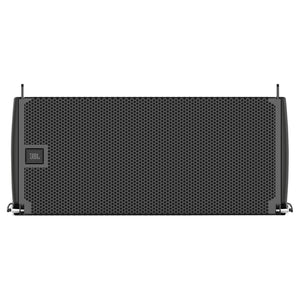
A compact two-way active line array element with built-in DSP and amplification, plus control software for Windows, macOS, and iPadOS. It is a plug-and-play way to build even sanctuary coverage that can scale with the room.
Shop at SoundPro →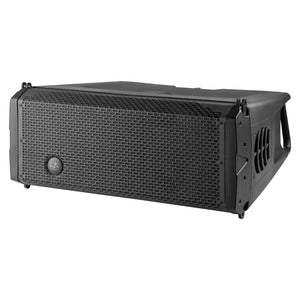
A symmetrical, compact two-way powered line array in a portable polypropylene cabinet, with a range of accessories for different deployments. A common choice for houses of worship that want array coverage without a large-format system.
Shop at SoundPro →If you are deciding whether to repair, replace, or start fresh, our church sound system upgrade guide walks through that decision, and our guides to small church sound system packages and the best sound systems for churches cover complete system options.
Share your sanctuary size, service schedule, and current equipment and a SoundPro Account Manager will recommend a plan that fits your timeline and budget.
Lighting: Visibility, Mood, and Camera-Friendly Light
Lighting does two jobs during a holiday service. It makes sure the congregation and the camera can clearly see the people leading worship, and it sets the tone of the service. Visibility comes first. Front lighting angled at about 45 degrees and offset to both sides evens out shadows on speakers and musicians, and backlighting adds dimension so people do not blend into the backdrop. Washes on walls and architectural features then fill the room so it does not look dark or flat.
Seasonal looks usually come from color and intensity changes rather than new fixtures. Warm ambers and soft whites suit candlelight-style evening services, while brighter and cleaner washes fit Easter celebrations. The most reliable way to deliver those looks is to program and save them as cues during rehearsal, so volunteers recall a look with one button instead of building it live. For livestreamed services, choose LED fixtures with flicker-free operation and keep color temperature consistent across fixtures so skin tones look natural on camera. Our church lighting guide walks through front, back, and wash lighting, fixture types, and control in more detail.
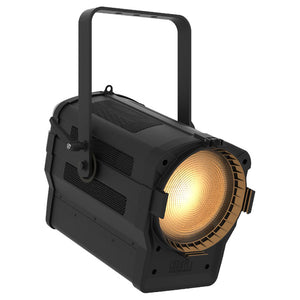
Fresnel fixtures are widely used for front lighting because the adjustable lens controls beam width, and a warm white LED version delivers a natural look on people in the room and on camera.
Shop at SoundPro →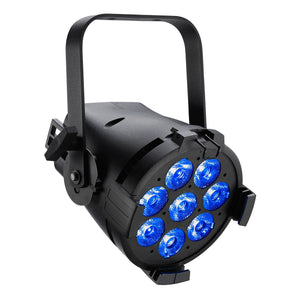
LED pars are a compact, energy-efficient way to add color washes and backlight. They are a practical option for building seasonal looks in a sanctuary without a large fixture count.
Shop at SoundPro →Livestream and Video: Planning for Hybrid Attendance
Hybrid worship is now an expected part of church life, and holiday services often draw the largest online audience of the year, including relatives and members who are traveling. That makes the stream a service in its own right, with its own preparation. Test the full path from camera to platform at the same time of day as the service, send the stream an audio mix from the console rather than relying on a room microphone, and keep a backup connection or local recording running in case the primary stream drops.
The encoder is the part of the chain many teams overlook. It converts the camera or switcher signal into the stream your platform receives, and the right choice depends on your camera count, your operator, and your internet connection. Our church live streaming equipment guide covers cameras, encoders, switchers, and audio for streaming in depth. Churches considering a visual upgrade for the sanctuary can also read our church LED video wall guide.
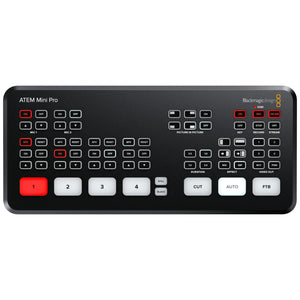
A compact HDMI switcher with built-in streaming and recording, which lets a small team switch cameras and send the stream from a single unit. It is a common starting point for churches that want to simplify their streaming rack.
Shop at SoundPro →Volunteers and Rehearsal
Technology problems on high-attendance days often come down to preparation, not equipment. A rehearsal with the actual band, choir, and speakers is the most valuable hour of the entire preparation window, because it is the only time the team can set levels, save lighting cues, and confirm camera positions under realistic conditions. Write a short run sheet for each service that lists the sequence of events, the microphones in use, and the lighting and camera cue for each segment.
Give each volunteer a single clear responsibility, label spare batteries and cables by location, and keep a one-page troubleshooting card at the sound booth for the most likely issues. Newer volunteers benefit from a structured introduction to the system, and our article on AV operation for house of worship volunteers covers the fundamentals. If a choir or children's group is part of the program, review our guide on how to mic a choir before the rehearsal.
Church Technology Trends for 2026
These are the developments shaping how houses of worship are planning their technology this year.
Hybrid worship is the baseline
Streaming has settled into a permanent part of church life. Many congregations now treat online attendance as part of the service rather than an add-on, which raises expectations for audio quality, camera work, and reliability.
Broadcast features in smaller venues
PTZ cameras and 4K production gear are increasingly designed with houses of worship in mind, bringing features once reserved for larger productions within reach of smaller teams and volunteer operators.
Networked and remote-controlled lighting
LED fixtures and control systems that can be operated from a tablet or phone are becoming more common, and automation tools are beginning to appear in larger worship facilities.
AI in ministry
Staff and pastors are adopting AI tools for administrative work and sermon research, while the use of AI-generated worship music is an active point of discussion among worship leaders.
Safety and communication
Safety is a growing consideration for houses of worship, and many are reviewing intercom, paging, and assistive listening systems as part of their AV planning.
Flexible, multipurpose spaces
More churches are redesigning sanctuaries with movable seating for different events, which raises the value of portable, easy-to-reconfigure equipment. Our guide to portable worship AV gear covers that approach.
Talk with a SoundPro House of Worship specialist about sound, lighting, and streaming gear that can be in place before your first rehearsal.
Final Week Checklist
- Replace every wireless microphone and in-ear monitor battery, and stage labeled spares.
- Walk the room with a handheld microphone to confirm there are no dropouts or dead spots.
- Recall each saved mixer scene and lighting cue once in the empty room.
- Check camera framing for each segment of the service.
- Start a test stream at least an hour before service and confirm audio levels on the stream.
- Confirm that the backup internet connection or local recording is running.
- Place a printed run sheet and troubleshooting card at the sound booth.
Shop the Gear Mentioned in This Guide
- Wireless Microphone Systems at SoundPro
- Sennheiser Wireless at SoundPro
- RF Venue Antennas and Distribution at SoundPro
- Digital Mixers at SoundPro
- Yamaha DM Series Mixers at SoundPro
- PA Speakers at SoundPro
- JBL SRX900 Series at SoundPro
- DAS Audio EVENT Line Arrays at SoundPro
- Lighting Fixtures at SoundPro
- Lighting Controllers at SoundPro
- Video Cameras at SoundPro
- Video Switchers and Mixers at SoundPro
- SoundPro House of Worship Solutions
FAQ: Church Busy Season Tech
What should a church tech team do before Christmas Eve and Easter services?
Start six to eight weeks ahead. Audit wireless microphones, batteries, and cables, test every lighting fixture, and run a full stream test from the camera to the platform. Two weeks out, hold a rehearsal with the actual band, choir, and speakers so levels, lighting cues, and camera positions can be saved and recalled on service day.
How early should a church order AV equipment before the holidays?
Order as soon as the audit identifies a gap, ideally three to four weeks before the first holiday rehearsal. That leaves time for delivery, setup, and volunteer practice. In-stock items at SoundPro ship the same day on orders placed before 4:00 PM CST, and Account Managers can confirm availability for larger orders.
How many wireless microphones does a church need for a holiday service?
Count every voice that will be live at the same time, including pastors, narrators, soloists, and choir or children's group microphones, then add spares. Holiday programs usually need more channels than a standard Sunday, so confirm that your wireless system has enough frequency headroom before adding units.
Do churches need a separate livestream setup for holiday services?
Most churches use the same system they stream with every week. The difference is planning: confirm the audio feed from the mixer, test the encoder and internet connection under real conditions, and keep a backup connection or recording running in case the primary stream drops.
What type of speaker system works best for a church sanctuary?
It depends on room size and shape. Powered line arrays such as the JBL SRX900 series and DAS EVENT series suit mid-size sanctuaries that need even coverage, point-source speakers such as the JBL SRX912M and SRX915M suit smaller rooms and side fills, and ceiling speakers such as the JBL Control 400 series work for lobbies, overflow rooms, and fellowship halls. A review that includes room measurements gives the most reliable answer.
Which wireless microphone system is best for a church?
Match the system to your budget, channel count, and room. Sennheiser's XSW series suits tighter budgets, the EW-DX line is a mid-range digital platform that fits most sanctuaries, and Spectera is built for larger or more complex venues. Pair any system with well-placed antennas, such as RF Venue diversity antennas, to reduce dropouts.
What lighting works best for a livestreamed church service?
LED fixtures with flicker-free operation and consistent color temperature across fixtures work best on camera. Front lighting angled at about 45 degrees keeps speakers and musicians evenly lit, and warm white light helps avoid a washed-out look on screen.


