


Church Sound System Upgrade Guide: When to Repair, Replace, or Start Fresh
A church sound system upgrade is one of the most significant investments a congregation makes in its facility, and one of the most commonly postponed. The symptoms are familiar: Sunday morning is a constant struggle, volunteers are frustrated, feedback happens regularly, and the congregation in the back third of the room can't understand the pastor clearly. The question isn't whether an upgrade is needed. It's how to make the right decision about what to fix, what to replace, and what to prioritize when budget is limited. After helping hundreds of churches through this exact decision, here's the framework SoundPro's HOW specialists use every time. Planning an upgrade? Talk to a church AV specialist about how your sound, video, and lighting systems work together before you buy.
SoundPro's House of Worship specialists have 16+ industry certifications and design church audio systems every week. Real answers, fast.
- Signs Your Church Sound System Needs an Upgrade
- Repair vs. Replace: How to Decide
- What to Upgrade First: Prioritizing by Impact
- Console Upgrade: When Your Mixer Is Holding You Back
- PA System Upgrade: When the Room Isn't Covered
- Wireless and IEM Upgrade: When Stage Volume Is the Problem
- How to Phase a Church Sound Upgrade Over Time
- Next Steps
- FAQ
Signs Your Church Sound System Upgrade Is Overdue
Most churches don't arrive at a sound system upgrade because of a single catastrophic failure. It happens gradually: the system that worked for a congregation of 150 now struggles with 300, the analog board that made sense ten years ago is now a liability with a volunteer team, the wireless mics drop out every third Sunday. Here are the most reliable indicators that upgrade conversations need to start now.
- Consistent feedback on Sunday mornings. Occasional feedback is an operator issue. Recurring feedback at normal operating levels is a system issue, either poor speaker placement, inadequate feedback suppression, or microphones that don't reject stage noise effectively.
- Volunteer burnout from the tech booth. If your sound volunteers dread Sundays, the system is too complicated for its own good. A well-matched digital console with scene recall should make volunteer operation easier, not harder. If it's not doing that, the console is wrong for the team.
- Uneven coverage across the room. If the front rows are too loud and the back rows can't hear clearly, your speaker placement, speaker count, or speaker type isn't matched to the room. This doesn't fix itself with volume.
- Stage volume that fights the front-of-house mix. When floor wedges are loud enough that the FOH engineer can't control the room, the monitoring system is the problem. This is the clearest signal that an IEM transition is overdue.
- Your system can't support livestreaming. If your current setup has no clean path for a dedicated stream mix, you're limiting your online ministry every week. A modern digital console solves this immediately.
- Equipment that's more than 10 to 15 years old. Analog consoles, passive speakers, and first-generation digital wireless systems from the early 2010s are approaching the end of their practical service life. Parts availability shrinks, reliability decreases, and the gap between what they can do and what current gear can do widens every year.
"The most expensive sound system decision a church can make is waiting too long. Every Sunday with a system that's fighting the team costs volunteer hours, congregation experience, and online ministry reach. The upgrade pays for itself faster than most churches expect."
Repair vs. Replace: How to Decide on a Church Sound System Upgrade
Not every problem requires a full replacement. The right framework is simple: repair when the component is fundamentally sound and the failure is isolated; replace when the component is limiting the rest of the system or when repair cost exceeds 40 to 50% of replacement cost.
| Situation | Repair | Replace |
|---|---|---|
| Single speaker driver failure | Yes, if the cabinet is otherwise sound | If cabinet is damaged or obsolete |
| Console fader or channel failure | Yes, if the console is under 8 years old | If the console is analog or lacks features your team needs |
| Wireless mic dropouts | Only if it's an antenna placement issue | Yes, if the system is analog or over 10 years old |
| Feedback issues | Repositioning and tuning first | If speakers are mismatched to the room |
| Amplifier failure | Yes, if under 10 years old and parts available | If it's underpowered for the room or from an obsolete platform |
| Entire system struggles every Sunday | No | Full assessment and phased upgrade plan |
What to Upgrade First: Prioritizing Your Church Sound System Upgrade by Impact
When budget is limited and everything seems like it needs attention, the right approach is to identify the single weakest link in your signal chain and fix that first. Upgrading everything at once is rarely necessary and rarely possible. Here's the order SoundPro's HOW specialists recommend for maximum impact per dollar.
1. Digital console first
If your church is still running an analog console, nothing else you upgrade will improve Sunday morning consistency as dramatically as moving to digital. Scene recall alone is worth the investment for churches with volunteer tech teams. A great digital console makes everything downstream perform better, including speakers and wireless systems that were already in place. It also immediately unlocks a dedicated stream mix output, tablet control for walking the room, and onboard processing that replaces an entire rack of outboard gear.
2. Wireless microphones and IEM system second
Analog wireless systems and floor wedge monitors are the two components most likely to be creating problems that feel like PA issues. Dropout-prone wireless mics make vocalists sound unreliable. Loud floor wedges create stage volume that the FOH engineer is fighting every Sunday. Fixing these two things often makes the existing PA sound dramatically better without touching a single speaker.
3. PA speakers last
This is counterintuitive but consistently true. Churches almost always assume their speakers are the problem, but in the majority of cases the source signal going into the speakers is the actual issue: a poorly configured console, a bad mix, or feedback-causing wireless systems. Fix the signal chain first, then evaluate whether the speakers still need replacement. You may be surprised how much better the existing PA sounds with a clean signal driving it.
Console Upgrade: When Your Church Mixer Is Holding You Back
The console is the highest-leverage upgrade most churches can make. Two platforms consistently rise to the top of SoundPro's recommendations for churches ready to make the move to a modern digital console.

The M32 has been the church standard for over a decade, and for good reason: legendary Midas preamps, 40 input channels, 25 mix buses, AES50 digital snake connectivity, and one of the largest user communities of any professional console on the market. When your tech team has a question on a Tuesday morning, there are hundreds of YouTube tutorials and active forums covering the exact issue. For churches upgrading from analog to digital for the first time, the M32's ecosystem of training resources makes the transition significantly smoother than starting with a less-documented platform.
Shop at SoundPro →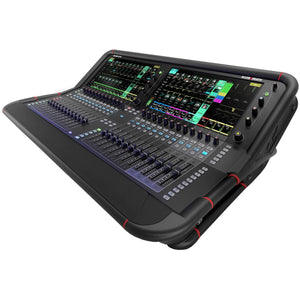
For large churches, multisite operations, and churches that broadcast their services, the Avantis is the console SoundPro's HOW specialists recommend most. 64 input channels, 42 mix buses, 96kHz processing, dual 7-inch HD touchscreens, and a dPack that unlocks Waves plugin processing directly on the console surface. Scene management handles the full complexity of a multi-service church: different configurations for the main service, youth room, and midweek event are a button press apart. The Avantis Director iPad app lets your lead engineer manage a remote campus from anywhere on the network.
Shop at SoundPro →For small churches making their first move to digital, our complete digital mixer guide for churches covers options from entry-level to large-church grade with specific recommendations by congregation size.
SoundPro's HOW specialists design church sound upgrades for congregations of every size. Tell us about your room and we'll match the right system.
PA System Upgrade: When Your Church Sound System Isn't Covering the Room
When you've addressed the signal chain and the PA still isn't performing, speaker replacement or addition is the right next step. The most common PA issues in churches are uneven coverage, excessive low-mid buildup, and insufficient headroom for the room size.
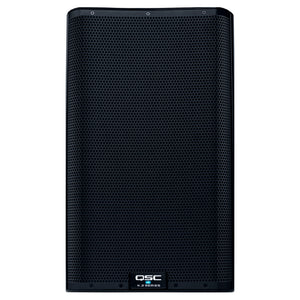
The QSC K12.2 is one of the most widely installed powered PA speakers in mid-size church sanctuaries. A 2,000-watt Class D amplifier, 12-inch low-frequency driver, and 1.75-inch compression driver deliver 132dB of maximum output with QSC's Directivity Matched Transition design for consistent coverage across the listening area. Factory presets and savable scenes let your tech team store and recall EQ settings optimized for your room, which is a genuine operational advantage for volunteer teams. Available in main PA or floor monitor configurations. A pair of K12.2s is the right starting point for sanctuaries up to approximately 400 seats.
Shop at SoundPro →When a pair of speakers isn't enough
Churches with balconies, wide fan-shaped sanctuaries, or rooms with significant acoustic challenges often need delay speakers, front fill speakers, or under-balcony fills to achieve even coverage. Adding a subwoofer is worth considering for churches with contemporary worship styles where low-frequency content is significant. SoundPro's HOW specialists can evaluate your room dimensions and congregation seating layout to recommend the right speaker count and placement before any purchase is made.
Wireless and IEM Church Sound Upgrade: When Stage Volume Is the Real Problem
If your Sunday morning sound struggles are happening at the mix level rather than at the speaker level, wireless microphones and in-ear monitors are the upgrade that makes the biggest difference fastest.

If your church is still running analog wireless microphones, the upgrade to digital wireless is the single most reliable improvement you can make. The Sennheiser EW-DX 835-S SET delivers two channels of digital wireless in a single rackmount package, with two SKM-S handheld transmitters, two MMD 835 cardioid dynamic capsules, and two rechargeable BA 70 batteries included. Up to 90 MHz of tuning bandwidth and automatic frequency management mean your tech team spends Sunday morning running sound, not troubleshooting RF. Replacing aging analog wireless systems with the EW-DX series typically eliminates the weekly dropout issues that wear out volunteer tech teams.
Shop at SoundPro →For churches ready to make the move from floor wedges to in-ear monitors, our complete IEM guide covers the full system design, from console aux configuration to RF coordination and earphone selection. Transitioning the full worship team to IEMs is consistently one of the highest-return upgrades a mid-size church can make, both for sound quality in the room and for hearing health of the musicians.
How to Phase a Church Sound System Upgrade Over Time
Most churches don't have the budget to upgrade everything at once, and they shouldn't try to. A phased approach lets you make impactful improvements immediately while building toward a complete system over 12 to 36 months. Here's the framework SoundPro's HOW specialists recommend.
| Phase | Timeline | What to Upgrade | Why First |
|---|---|---|---|
| Phase 1 | Immediate | Digital console + digital wireless mics | Highest impact per dollar. Fixes operator experience and signal quality immediately. |
| Phase 2 | 6 to 12 months | In-ear monitors for key performers | Reduces stage volume, improves FOH mix, protects hearing. Start with worship leader and drummer. |
| Phase 3 | 12 to 24 months | PA speaker upgrade or addition | With signal chain fixed, evaluate whether speakers are actually the remaining problem. |
| Phase 4 | 24 to 36 months | Acoustic treatment, streaming infrastructure, fills | Refinements that compound the gains from Phase 1 to 3. |
"Churches that try to upgrade everything at once often end up with a great system that nobody knows how to operate. Phasing the upgrade gives the team time to learn each component before the next one arrives. The result is a system that performs at its actual capability, not just its potential."
For a complete picture of how all these components connect in a full worship team audio system, our worship team audio setup guide covers the full signal chain from microphone to speaker with product recommendations at every stage.
Next Steps for Your Church Sound System Upgrade
- Audit your current system honestly. Which component is causing the most problems on a typical Sunday? Be specific: is it the console, the wireless mics, the monitors, or the PA? The answer determines where Phase 1 starts.
- Get a system assessment from SoundPro. Our HOW specialists review your current system, room dimensions, congregation size, and team experience level before making any recommendation. This conversation is free and typically takes 20 to 30 minutes. It has saved hundreds of churches from spending money on the wrong component.
- Build a phased budget plan. Even a rough two to three year plan helps church leadership see the full scope and approve initial phases with confidence. SoundPro can help you build a phased budget proposal that maps to your actual timeline and priorities.
- Read the deep-dive guides. Our digital mixer guide, IEM guide, and livestreaming guide cover the three most common upgrade components in depth with specific product recommendations at every budget level.
- Digital Mixers at SoundPro
- Wireless Microphone Systems at SoundPro
- Wireless IEM Systems at SoundPro
- PA Speakers at SoundPro
- Best Digital Mixer for Church 2026
- Complete In-Ear Monitor Guide 2026
- Worship Team Audio Setup Guide 2026
Fill out the form below and a SoundPro HOW specialist will reach out to discuss your room, your team, and the right upgrade path for your church.
FAQ: Church Sound System Upgrade
How much does a church sound system upgrade cost?
A church sound system upgrade cost depends heavily on which components need replacing and the size of the sanctuary. A console upgrade from analog to digital typically runs $1,500 to $5,000 depending on the platform. A digital wireless microphone system runs $600 to $900 per channel. A full worship team IEM rollout for 5 to 6 performers runs $5,000 to $9,000. A PA speaker upgrade for a mid-size sanctuary runs $3,000 to $10,000. A complete system upgrade covering all components typically runs $15,000 to $50,000 for mid-size churches. SoundPro's HOW specialists can provide a personalized quote based on your specific room and requirements.
Should I repair or replace my church sound system?
Repair isolated component failures when the rest of the system is sound and repair cost is under 40 to 50% of replacement cost. Replace components when they are limiting the performance of everything else in the system, when they are analog in a context that clearly needs digital, or when they are over 10 to 15 years old and reliability is declining. The most important question is whether the component is holding back the rest of the system: if it is, replacement almost always delivers a better return than repair.
What should a church upgrade first: console, speakers, or wireless?
In almost every case, the digital console first. A modern digital console with scene recall improves volunteer operator experience immediately, unlocks a dedicated stream mix output, provides tablet remote control, and cleans up the signal going to your existing speakers and wireless systems. Many churches find their existing PA sounds dramatically better after a console upgrade because the signal driving it is finally clean and properly processed. Wireless microphones and IEM systems are the second priority, PA speakers the third.
How long does a church sound system last?
Quality professional audio equipment has a practical service life of 10 to 15 years for most components, though well-maintained systems can last longer. Digital consoles typically have a functional lifespan of 8 to 12 years before software support ends and repair parts become scarce. Powered speakers and amplifiers can last 15 or more years with proper care. Wireless microphone systems become problematic earlier, as RF spectrum changes and technology advances make older analog systems increasingly unreliable. A system that's performing well but approaching 10 to 12 years old is worth a proactive assessment before it starts causing Sunday morning problems.
Can I upgrade my church sound system in phases?
Yes, and for most churches this is the right approach. A phased upgrade lets you make the highest-impact improvements immediately while spreading cost over 12 to 36 months. The recommended order is console first, then wireless microphones and IEM system, then PA speakers, then acoustic treatment and streaming infrastructure. Each phase compounds the gains of the previous one, and phasing gives your volunteer team time to learn each new component before the next arrives.
How do I know if my church PA speakers need replacing?
Before replacing PA speakers, rule out the signal chain as the cause of the problem. Uneven coverage, feedback, and poor clarity are more often caused by a poorly configured console, analog wireless systems, or loud stage wedges than by the speakers themselves. If the signal chain is clean and the PA still has coverage gaps, excessive low-mid buildup, or insufficient headroom for the room size, speaker replacement or addition is the right call. SoundPro's HOW specialists can help evaluate whether your specific symptoms point to speakers or to something upstream.
What is the best digital mixer for a church upgrade?
For small churches with volunteer teams, the Allen & Heath CQ-18T and Yamaha TF1 are the top choices for ease of use and fast learning curves. For mid-size churches, the Midas M32 is the most widely used professional console in churches at that scale. For large churches and multisite operations, the Allen & Heath Avantis is SoundPro's top recommendation. Our complete digital mixer guide covers all five options in depth.


