


Analog vs Digital Mixer: The Complete Guide for 2026 Which Is Right for Your Setup?
You're standing in front of a gear decision that will shape how every service, every show, or every event sounds for the next five to ten years. Analog or digital, and everyone you ask seems to have a strong opinion. After helping thousands of churches, venues, and live production teams spec their console setups since 1972, here is the honest answer: neither is universally better. The right choice depends entirely on your team, your use case, and where you're headed. This guide gives you every comparison you need to make the call confidently.
Talk to a SoundPro Account Manager with 16+ industry certifications, real answers fast. No pressure, no upsell.
- How Analog and Digital Mixers Actually Work
- Sound Quality: Analog Warmth vs Digital Precision
- Key Differences: Features, Workflow, and Flexibility
- Head-to-Head Comparison Table
- Who Should Choose an Analog Mixer
- Who Should Choose a Digital Mixer
- Best Analog Mixers in 2026
- Best Digital Mixers in 2026
- Cost Comparison: What to Budget
- Special Considerations for Church and Live Production
- How to Make the Final Call
- FAQ
How Analog and Digital Mixers Actually Work
Understanding the core architecture of each type makes every other comparison make more sense.
An analog mixer processes audio as a continuous electrical signal the entire time it's in the console. Every fader, every EQ knob, every aux send is a physical circuit that directly manipulates that signal. What you see is what you get: one knob, one function, always visible and always accessible. The signal path is straightforward: microphone in, circuitry processes it, speakers out. There is no conversion, no latency, no software.
A digital mixer converts the incoming analog audio signal to digital data at the input stage using an analog-to-digital (A/D) converter. From that point on, a digital signal processor (DSP) handles everything (EQ, compression, routing, effects) as mathematical operations on that data stream. The processed signal is converted back to analog at the output stage and sent to your speakers. Because the DSP can run dozens of processes simultaneously, a single digital console can do the work of an analog board plus an entire rack of outboard processors.
"The question isn't which type sounds better in a lab. It's which one your team can operate well on a Sunday morning, at a Thursday rehearsal, and at a festival in August, consistently and without drama."
Sound Quality: Analog Warmth vs Digital Precision
This is the debate that fills forums and never fully resolves, and there's a reason for that: both sides are partially right.
The analog argument
Analog signal paths introduce subtle harmonic saturation, tiny amounts of second and third-order harmonic distortion, that many engineers describe as "warmth" or "glue." High-end analog consoles with boutique preamps (SSL, Neve, API) have a character that has been chased by the recording industry for decades. For studio work and high-end installations where sonic character is a deliberate part of the aesthetic, a great analog board in great hands can be exceptional.
The digital argument
Modern digital mixers running at 96kHz, like the Allen & Heath SQ series and Avantis, deliver measured specifications that exceed what any affordable analog console can achieve. Noise floor, frequency response, channel-to-channel consistency: by the numbers, high-quality digital processing is cleaner. For live applications where the goal is accurate, consistent, controlled sound rather than musical character, digital is arguably the stronger technical choice.
The honest answer
For the vast majority of live sound applications (churches, venues, corporate events, touring), the difference in sound quality between a well-operated digital console and a well-operated analog console is not what determines the outcome. The operator, the room acoustics, the speaker system, and the microphone placement matter far more than whether the summing is happening in circuitry or in a DSP. Where you will notice the difference is in workflow, flexibility, and what happens six months after the purchase when your team is running it every week.
Key Differences: Features, Workflow, and Flexibility
Scene recall
This is the single most important practical advantage digital offers for repetitive live environments. Every setting on a digital console (every fader position, EQ curve, effects send level, routing assignment) can be saved as a named scene and recalled instantly. For a church running the same basic service structure every Sunday, this is transformative. Your volunteer tech team doesn't spend 20 minutes resetting the board. They press recall. Easter sounds perfect? Save it and pull it up next year.
Analog consoles have no scene recall. Every service starts from whatever state the board was left in. For volunteer-operated environments, this is a meaningful operational disadvantage.
Onboard processing
A digital console includes a full parametric EQ, a gate, a compressor, and delay on every single channel, simultaneously, without additional hardware. Most also include an onboard effects library with reverb, chorus, echo, and modulation. On an analog board, any processing beyond basic EQ requires outboard gear: a rack of compressors, a separate effects unit, a digital reverb box, all cabled together. A digital console replaces that entire rack.
Routing flexibility
Analog routing is determined by the physical architecture of the board. You have a fixed number of aux sends, groups, and matrix outputs, and they work the way they were designed to work. Digital routing is software-defined: any input can be sent anywhere, signals can be split and re-routed without additional hardware, and a single console can simultaneously run a main mix, multiple monitor mixes, a broadcast mix, a record mix, and a hearing loop output from the same set of inputs. This is why digital is the only practical choice for multisite churches and broadcast environments.
Remote control
Nearly every professional digital console supports wireless tablet control over Wi-Fi. Your sound tech can walk the room during rehearsal and adjust the mix from where the congregation actually sits, not from the fixed console position at the back where the acoustics are different. This single capability closes the gap between the mix your tech hears at the board and the mix everyone else hears. No analog console offers this natively.
Learning curve
Analog boards are genuinely easier to learn initially. Every function is visible, labeled, and physically accessible. There is no menu diving, no layer navigation, no software to update. Someone with zero audio experience can look at an analog board and understand the basic signal flow within an hour. Digital consoles require learning an interface before the audio knowledge becomes useful. The gap varies significantly by console: the Allen & Heath CQ-18T and Yamaha TF series were explicitly designed to minimize this, but it is real.
Reliability and failure modes
Analog consoles fail gracefully. A bad channel fader affects one channel. A digital console failure can potentially take down the entire system because the DSP is processing everything simultaneously. In practice, professional digital consoles are extremely reliable, and most include redundant power supplies at higher price points. But for venues or churches where failure during a live event is catastrophic, the analog failure mode is simpler to manage. Many live touring engineers keep a compact analog board as a backup for exactly this reason.
Head-to-Head Comparison Table
| Feature | Analog Mixer | Digital Mixer |
|---|---|---|
| Scene recall | None; manual reset every session | Full scene save and instant recall |
| Onboard processing | Basic EQ per channel; outboard for dynamics/FX | EQ, gate, compressor, delay, FX on every channel |
| Routing flexibility | Fixed hardware routing | Software-defined, fully reconfigurable |
| Tablet/remote control | Not available | Wi-Fi tablet control standard on most models |
| Learning curve | Low; immediate visual layout | Higher; interface navigation required |
| Channel count | Fixed; what's on the surface is what you have | Often expandable via digital stagebox |
| Sound character | Subtle harmonic saturation; "warm" quality | Clean and precise; transparent reproduction |
| System cost (equivalent capability) | Higher when outboard processing is included | Lower; processing included |
| Failure mode | Graceful; one failure affects one channel | System-wide if DSP fails (rare) |
| Multisite / broadcast | Not practical | Fully supported via network audio |
| Volunteer-friendly | Better for complete beginners initially | Better for trained volunteers long-term |
Who Should Choose an Analog Mixer
Analog is genuinely the right answer for a specific set of situations. Don't let anyone tell you analog is obsolete. It's not. It's the right tool for the right job.
- Small venues with simple, consistent setups. A bar band, a coffeehouse, a 50-seat chapel where the same three inputs go to the same two speakers every night. No need for scene recall or complex routing. An analog board is faster to set up and faster to troubleshoot on a simple rig.
- Backup and redundancy applications. Professional touring engineers often carry a compact analog board as a backup that can run a show in an emergency without any software, any network, or any power sequencing.
- Recording studios where analog character is the aesthetic. If you're deliberately chasing warmth, saturation, and the harmonic coloration of analog circuitry, high-end analog consoles deliver something that digital processing approximates but doesn't identically replicate.
- Teams with strong analog expertise who don't need to grow. If your lead engineer has run the same analog board for ten years and the application isn't going to change, there is no operational reason to force a digital transition.
- Very tight budgets for basic applications. A solid analog board with adequate channels costs significantly less than a comparable digital setup when the application truly doesn't require digital's advantages.
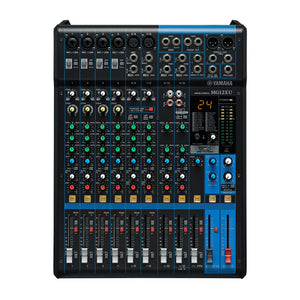
The MG12XU is the benchmark compact analog board for small venues, rehearsal spaces, portable churches, and production backup kits. Twelve channels, Yamaha's D-PRE microphone preamps, onboard SPX digital effects, and USB audio I/O for direct computer recording. Simple, reliable, and built to Yamaha's professional standards. Exactly what entry-level analog should mean.
Shop at SoundPro →Who Should Choose a Digital Mixer
For the majority of churches, venues, and live production teams reading this in 2026, digital is the right answer. Here's specifically who benefits most.
- Volunteer-operated sound teams. Scene recall alone justifies digital for any environment where different people run sound each week. The ability to save a perfect mix and recall it exactly eliminates the variability that makes volunteer audio stressful.
- Churches running in-ear monitor systems. IEM systems require one dedicated mix bus per performer. Most digital consoles provide 16 to 36 mix buses. Most analog boards provide 4 to 6 aux sends. If you have more than four or five performers on IEMs, analog simply doesn't have the outputs to support individual mixes.
- Organizations running a live stream alongside in-person sound. A dedicated stream mix output, separate from the house mix and the monitor mixes, requires buses that only digital provides cleanly.
- Multisite churches and touring operations. Network audio protocols like Dante and AES50 connect digital consoles across facilities over ethernet. One engineer can support a satellite campus's mix remotely. This doesn't exist in the analog world.
- Anyone who wants to grow. A church at 200 seats today that wants to be at 600 seats in five years should buy digital now. The console you buy today will have enough buses, routing, and expansion capability to grow with you. Buying analog to save money now usually means buying digital again in two years, at higher total cost.
SoundPro's Account Managers have helped churches and venues of every size navigate this exact decision. 16+ certifications, honest advice, no pressure.
Best Analog Mixers in 2026
If analog is right for your application, these are the models SoundPro's team recommends most consistently across live sound, portable installs, and production backup.
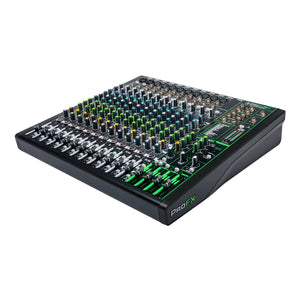
Sixteen channels, 24-bit onboard GigFX effects, 3-band EQ with sweepable mids, 3 aux sends, and Mackie's Onyx mic preamps in a road-worthy steel chassis. The ProFX16v3 is the go-to analog board for bands, portable churches, corporate AV, and contractors who need a reliable board that works out of the box. USB recording built in for direct computer capture at up to 24-bit/192kHz.
Shop at SoundPro →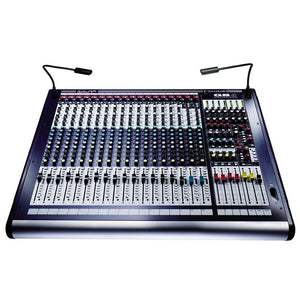
When the application genuinely calls for professional-grade analog (a studio recording environment, a touring production with an experienced engineer, or a venue that runs simple, consistent shows), the Soundcraft GB4 is where the conversation starts. GB30 British mic preamps with genuine warmth and headroom, 8 aux sends, 4 group buses, and the tactile control that analog devotees prefer. A serious board for serious applications.
Shop at SoundPro →Best Digital Mixers in 2026
These are the consoles SoundPro's team recommends most across church, live production, and installed sound, matched to use case rather than listed by price.
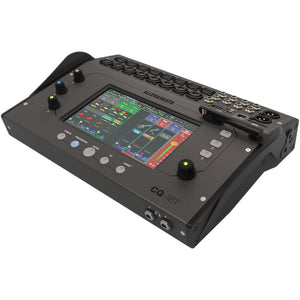
The easiest professional digital console on the market right now. A 7-inch touchscreen handles all navigation, built-in dual-band Wi-Fi eliminates the need for an external access point, and the Gain Assistant and Feedback Assistant tools actively help less experienced operators get a clean mix fast. 96kHz processing (most competitors at this price run 48kHz) delivers more headroom and less fatigue over a long service. The right first digital console for small churches and volunteer teams.
Shop at SoundPro →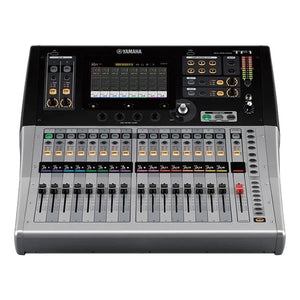
The TF1 is the gold standard for teams making the transition from analog. TouchFlow Operation puts every function within one or two touches, the fader-based layout feels immediately familiar, and Yamaha's D-PRE preamps deliver professional audio quality in a package that a first-time digital operator can be functional on within a single training session. Ten aux buses, more than enough for a growing IEM system, and a clear upgrade path through the TF3 and TF5 as the church grows.
Shop at SoundPro →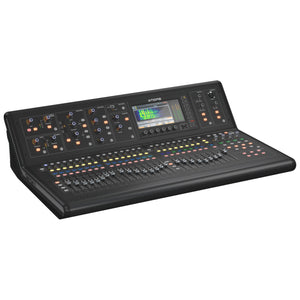
The most widely deployed professional digital console in mid-size churches for a decade and counting. Midas PRO preamps, 40 input channels, 25 mix buses, AES50 digital snake connectivity, and an ecosystem of training resources and community support that is unmatched at the price point. If your volunteer calls SoundPro with a routing question on a Tuesday, there is also a YouTube video from six churches who had the same question. That ecosystem matters.
Shop at SoundPro →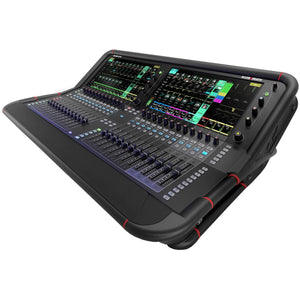
The console SoundPro's specialists recommend most often to large churches, multisite operations, and broadcast environments. Sixty-four input channels, 42 mix buses, dual 15.6-inch HD touchscreens, 96kHz processing, and the dPack that unlocks Waves plugin processing directly on the surface. Scene management handles the full complexity of multi-service operations: save and lock different configurations for the main service, the youth room, and the midweek event, and switch between them in seconds.
Shop at SoundPro →Cost Comparison: What to Budget
One of the most persistent misconceptions about digital consoles is that they're always more expensive than analog. When you account for the full system (console plus all the outboard processing that analog requires to achieve equivalent capability), the math often favors digital.
| Capability Level | Analog System Cost | Digital Console Cost | Verdict |
|---|---|---|---|
| Basic (16 ch, minimal processing) | $400–$800 | $800–$1,200 | Analog cheaper at this tier |
| Mid (24 ch, full dynamics + FX) | $1,500–$4,000 (board + rack) | $1,500–$2,800 (all-in) | Digital cheaper when processing included |
| Professional (40+ ch, full routing) | $8,000–$20,000+ (board + full rack) | $3,500–$8,000 | Digital significantly cheaper |
| Broadcast / large venue | $25,000–$80,000+ | $8,000–$25,000 | Digital dramatically cheaper |
Special Considerations for Church and Live Production
For churches
The volunteer operator reality makes digital the practical choice for the vast majority of church applications. Scene recall alone, the ability to save Sunday's mix and recall it identically next Sunday, transforms volunteer audio from a weekly re-learn into a consistent, reliable ministry tool. Combined with tablet control that lets your tech walk the room and IEM bus capacity for your worship team, digital doesn't just improve sound quality: it reduces stress, increases consistency, and makes your tech team's job sustainable over the long term.
The one exception is a very small church (under 100 seats, three or four consistent inputs, one or two reliable operators) where the simplicity of analog genuinely serves the application better than the added complexity of digital. In those cases, a quality analog board with good preamps is the right call.
"Every church that's come to us after years of struggling with an underpowered analog setup, fighting with stage volume, inconsistent Sunday mixes, volunteers who dread sitting at the board, tells us the same thing after their first month on digital: 'We should have done this years ago.'"
For live production
Live production is where the digital advantage is most unambiguous. The combination of rapid scene recall for different acts, deep routing for complex monitor setups, and network audio connectivity for multi-stage festivals makes digital the industry standard for professional touring and venue installs. The Midas M32 and Allen & Heath SQ and dLive series are the most common consoles on professional touring riders for good reason.
Analog still shows up in live production as aux-fed subgroups, front-fill amplifier chains, and backup systems, but the front-of-house console on a professional touring rig is almost universally digital today. If you're building a production rental inventory or a venue install, buy digital.
- The Best Digital Mixer for Church in 2026: Recommendations by Church Size
- Complete In-Ear Monitor Guide for Churches and Live Production
- Allen & Heath Consoles at SoundPro
- Yamaha Consoles at SoundPro
- Midas Consoles at SoundPro
- Soundcraft Consoles at SoundPro
- Mackie Mixers at SoundPro
How to Make the Final Call
If you've read this far, you're ready to decide. Here's the three-question framework SoundPro's Account Managers use with every console inquiry.
- Who is operating it and how often does the operator change? If the same trained engineer runs every show, analog is viable. If volunteers rotate through, digital with scene recall is the practical choice. Full stop.
- What does your full system need to do? Count your IEM feeds, your mix outputs, your broadcast requirements. If your bus count exceeds what a mid-range analog board provides (which it usually will), the decision is already made.
- Where are you in three years? The console that fits today but limits you tomorrow is a more expensive decision than buying one tier up now. If you're growing, buy digital and buy ahead.
Get a personalized recommendation from SoundPro's certified Account Managers. We'll match the right console to your room, team, and budget. We've been doing it since 1972.
FAQ: Analog vs Digital Mixer
What is the main difference between an analog and digital mixer?
An analog mixer processes audio as a continuous electrical signal through physical circuitry: one knob per function, always visible. A digital mixer converts the audio signal to data at the input, then a DSP handles all processing (EQ, compression, effects, routing) as mathematical operations before converting back to analog at the output. The practical result is that digital consoles can do far more (scene recall, tablet control, onboard processing on every channel, flexible routing) within a single unit, while analog consoles offer immediate hands-on simplicity with a lower initial learning curve.
Does an analog mixer sound better than a digital mixer?
Not categorically. High-end analog consoles introduce subtle harmonic saturation that some engineers describe as "warmth," which is valued in specific recording and studio contexts. Modern high-quality digital consoles running at 96kHz (like the Allen & Heath SQ and Avantis series) measure better than comparable analog boards by nearly every objective specification. For live sound applications (churches, venues, touring), the difference in sound quality between a well-operated analog board and a well-operated digital board is negligible compared to the differences introduced by the room, the speakers, the microphones, and the operator.
What are the disadvantages of a digital mixer?
The main disadvantages are a steeper initial learning curve (navigating menus and layers rather than direct physical access to every control), higher entry-level cost compared to basic analog boards, and a more complex failure mode: a DSP failure can affect the entire system rather than a single channel. Software and firmware updates also introduce a maintenance consideration that analog boards don't have. For very simple applications with experienced operators, the added complexity of digital can be more overhead than it's worth.
Do professionals still use analog mixers?
Yes, in specific contexts. High-end recording studios continue to use premium analog consoles (SSL, Neve, API) for their sonic character. Many live touring engineers carry compact analog boards as emergency backups. Some small venues and musicians prefer analog for its tactile immediacy and simple failure modes. However, the front-of-house console on most professional touring productions and installed venues is now digital, and has been for well over a decade. Analog isn't obsolete. It's just the right tool for a narrower range of applications than it once was.
Why would you use an analog mixer instead of digital?
The strongest reasons to choose analog today are simplicity, cost at the entry level, and specific sonic character. For very small setups with consistent operators and minimal processing needs, analog is faster to set up and easier to troubleshoot. For recording applications where harmonic saturation is aesthetically desirable, high-quality analog preamps and summing offer something that digital approximates but doesn't identically replicate. For backup and redundancy systems, analog boards are the simplest possible fallback: no software, no networking, no power sequencing required.
What is the lifespan of a digital mixer?
Professional-grade digital consoles from major manufacturers (Yamaha, Allen & Heath, Midas) are designed for a 10-to-15-year service life with proper maintenance. The hardware is built to the same standards as analog consoles. The practical limitation is usually software support and firmware updates; manufacturers eventually stop updating older platforms, which can create compatibility issues with newer networking and expansion hardware. Analog consoles can technically last indefinitely as long as components are available for repair. For planning purposes, budget for a digital console refresh on a 10-year cycle.
Which mixer is better for a church with volunteers?
Digital is better for the vast majority of volunteer-operated church environments, and the primary reason is scene recall. The ability to save a perfect mix and recall it identically the following Sunday eliminates the inconsistency that makes volunteer audio stressful. The Allen & Heath CQ-18T and Yamaha TF series were specifically designed with volunteers in mind: simplified interfaces, assistive tools, and tablet control that lets operators walk the room. The investment in training for digital pays back every single week for as long as the console is in service.
Can you use a digital mixer without Wi-Fi or internet?
Yes. A digital mixer operates completely independently of any internet connection; all processing happens internally. The Wi-Fi capability on consoles like the Allen & Heath CQ-18T is for local network tablet control only, not for any internet-dependent function. You can operate any digital console on a standalone basis with no network connection at all; the tablet control and remote app features simply won't be available without a local Wi-Fi connection between the console and the control device.
What digital mixer should I buy for a mid-size church?
For mid-size churches (200 to 800 seats) running a full worship band with in-ear monitors and a live stream, the Midas M32 and Allen & Heath SQ-6 are the two consoles SoundPro's Account Managers recommend most. The M32 wins on community support and ecosystem: more churches run it than any other console at this price, meaning more training resources and more local engineers who know the platform. The SQ-6 edges ahead on raw specs: 96kHz processing, 48 channels, 36 mix buses. Both are excellent. Our complete church mixer guide covers the full comparison.
Is the Yamaha TF1 better than an analog mixer for a small church?
For most small churches, yes. The Yamaha TF1 costs more than an entry analog board, but the scene recall capability alone, saving and recalling your Sunday mix instantly, is worth the premium for any volunteer-operated environment. The TF1's TouchFlow Operation interface is the most analog-feeling digital interface available, making the transition accessible. Pair it with a stage box for cable management and you have a complete, professional small-church console system that will serve you reliably for a decade. For churches under 100 seats with simple, consistent setups and experienced operators, an analog board remains a reasonable choice.
How fast can SoundPro ship a mixer?
In-stock consoles ship same day on orders placed before 4:00 PM CST. For custom configurations, digital snake integration, or items with manufacturer lead time, SoundPro's Account Managers can confirm availability and build out a delivery timeline. If you're planning an install before a fall series launch or an upcoming event, reach out now, as console availability can tighten heading into peak season, and an early conversation protects your install window.


